

PUF Panels for Cold Storage: #1 Complete Guide to Thermal Insulation & Efficiency
PUF panels for cold storage:
The Building Block of Intelligent Cold Storage Solutions
In This Guide
- What Are PUF Panels?
- Why They Matter for Cold Chain Management
- Key Functions of PUF Panels
- Types of PUF Panels for Cold Storages
- Technical Specifications
- Durability Comparison
- How to Choose the Right Panel
- PUF Panels & Cold Storage Efficiency
1. What Are PUF Panels?
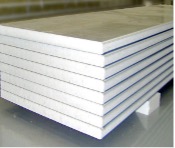
PUF — Polyurethane Foam — panels are high-performance, prefabricated sandwich-construction insulation panels that form the structural backbone of modern cold storage solutions. They are used extensively across food processing cold storage facilities, pharmaceutical cold room environments, clean rooms, and industrial buildings. A typical PUF panel consists of a rigid polyurethane foam core injected or laminated between two metal facings — generally galvanized steel, stainless steel, or aluminium.
The foam core is formed through an exothermic reaction between two chemical components — polyol and isocyanate — creating a closed-cell structure that is exceptionally resistant to heat transfer. This molecular architecture is what gives PUF panels their outstanding thermal insulating performance, making them the preferred choice for leading cold storage manufacturers India-wide and globally.
0.022
W/m·K
Thermal Conductivity
40–200
mm
Available Thickness Range
40 kg/m³
typical
Core Density
25+
years
Service Life
“PUF panels represent the most thermally efficient, structurally sound, and cost-effective solution for any facility where temperature control is critical to quality and compliance.”
2. Why PUF Panels Matter for Cold Chain Management
In industries where temperature precision is non-negotiable — pharmaceuticals, dairy, meat processing, horticulture, and ice cream manufacturing — the quality of insulation is directly correlated with product integrity, energy costs, and regulatory compliance. A robust cold chain management system starts with the right thermal envelope, and PUF panels address all three challenges simultaneously.
Traditional insulation methods — brick-and-mortar construction with fiberglass batts, or expanded polystyrene boards — fall short on multiple fronts. They allow thermal bridging, absorb moisture over time, are slow to install, and cannot achieve the tight, hygienic joints required in food processing cold storage or pharmaceutical cold room environments. PUF panels, by contrast, are engineered for precision.
The Indian cold chain logistics sector is growing rapidly, with demand for cold storage exceeding 35 million tonnes annually. Yet only about 11% of perishable produce is processed in the cold chain, resulting in staggering post-harvest losses. Upgrading to efficient PUF panel-based infrastructure — often as part of turnkey cold chain projects — is central to closing that gap. When further enhanced with IoT cold room systems and AI-driven IoT solutions, these facilities become truly next-generation operations capable of real-time monitoring, predictive maintenance, and autonomous temperature control.
3. Key Functions of PUF Panels
Thermal Insulation
The primary function. The closed-cell polyurethane foam core has an extremely low thermal conductivity (λ ≈ 0.022–0.024 W/m·K), meaning minimal heat flows through the panel wall. This dramatically reduces the load on refrigeration equipment — including BMS HVAC systems — and keeps internal temperatures stable even during external temperature spikes.
Structural Load-Bearing
PUF panels are not merely insulation — they serve as structural elements. The composite sandwich construction (metal face + foam core + metal face) gives them a high strength-to-weight ratio, enabling them to be self-supporting across large spans without secondary framing in many applications.
Vapour Barrier
Moisture ingress is the enemy of any cold storage solution. The closed-cell foam and metal facings act as an integrated vapour barrier, preventing condensation within the wall assembly — a critical advantage over fiberglass-based insulation, which readily absorbs moisture and loses performance over time.
Fire Resistance
Modern PUF panels are available with fire-retardant additives and Class B or Class A certified facing materials (such as PIR core variants) that slow flame spread and reduce smoke generation, bringing them into compliance with IS 1644 and other building safety codes.
Hygienic Interior Environment
Food processing cold storage and pharmaceutical cold room applications demand smooth, impermeable interior surfaces. PUF panels with stainless steel or pre-painted GI facings provide a wipe-clean, non-porous surface that resists bacterial growth and withstands aggressive cleaning agents and sanitisers.
Speed of Construction
Prefabricated PUF panels arrive on site ready to install. A skilled team can erect an entire cold room in days rather than weeks — a key advantage in turnkey cold chain projects where time-to-operation is critical. This reduces labour costs and minimises the business downtime associated with facility construction or expansion.
4. Types of PUF Panels
PUF panels are manufactured in a variety of configurations to suit different applications, temperature ranges, and structural requirements. Here is a comprehensive breakdown:
Cold Room / Refrigerated Storage Panels
The most widely used type in standard cold storage solutions. Designed for above-zero refrigerated environments storing fruits, vegetables, dairy, and beverages. Available with GI or pre-painted steel facings and tongue-and-groove or cam-lock joints. Commonly specified by cold storage manufacturers India-wide for ambient to medium-cold applications.
Operating Range: 0°C to +15°C | Thickness: 60–100 mm | Service Life: 20–25 years
Deep Freeze / Blast Freeze Panels
Engineered for sub-zero applications including frozen food storage, ice cream plants, and blast freezing tunnels. Thicker core with higher density foam to maintain integrity at extreme low temperatures. Often paired with intelligent refrigeration systems for precise temperature management.
Operating Range: -18°C to -40°C | Thickness: 100–200 mm | Service Life: 25–30 years
PIR (Polyisocyanurate) Fire-Retardant Panels
A superior variant where the foam chemistry is modified to yield polyisocyanurate rather than polyurethane, offering significantly enhanced fire resistance (Class 1/Class 0 ratings). Preferred where building codes mandate fire performance, including multi-storey food processing and pharmaceutical facilities.
Operating Range: -30°C to +80°C | Thickness: 80–150 mm | Service Life: 25+ years
Walk-In Cold Room Panels
Modular, smaller-format panels for on-site assembly of walk-in coolers and smaller commercial cold rooms. Feature easy cam-lock joinery for tool-free, airtight panel connections and demountable construction. An ideal cold storage solution for restaurants, pharmacies, and small distributors.
Operating Range: -5°C to +10°C | Thickness: 60–80 mm | Service Life: 15–20 years
Pharmaceutical / Clean Room Panels
Manufactured to GMP and FDA-compliant standards, these panels are central to any compliant pharmaceutical cold room environment. They feature flush joints and coved internal corners to eliminate contamination recesses. Suitable for vaccine storage and biotech facilities, and frequently integrated with IoT cold room systems for continuous environmental monitoring.
Operating Range: 2°C to 25°C | Thickness: 60–120 mm | Service Life: 25–30 years
Roofing / Ceiling PUF Panels
Specifically engineered for horizontal or sloped roof applications. Feature higher compressive strength facings to handle live loads, drainage profiles in the outer skin, and pre-drilled fixing points for rapid installation.
Application: General Insulation | Thickness: 80–150 mm | Service Life: 20–25 years
5. Technical Specifications
Understanding the technical parameters allows you to compare products meaningfully and specify panels accurately for your project. Below is a comprehensive specification reference used by engineers and cold storage manufacturers India-wide:
| Parameter | Standard Value / Range | Significance |
| Core Material | Rigid CFC-free PUF / PIR foam | Determines insulation quality and fire performance |
| Core Density | 38–42 kg/m³ | Higher density = better compressive strength and dimensional stability |
| Thermal Conductivity (λ) | 0.022–0.024 W/m·K | Lower value = better insulation; critical for energy cost calculation |
| Panel Thickness | 40 / 60 / 80 / 100 / 120 / 150 / 200 mm | Selected based on target temperature and ambient conditions |
| Panel Width | 900 mm / 1000 mm / 1200 mm | Wider panels mean fewer joints; more airtight construction |
| Panel Length | Up to 12,000 mm (custom) | Long panels reduce on-site cutting and waste |
| Facing Material | GI, Colour-coated GI, SS 304/316, Aluminium | Determines hygiene rating, corrosion resistance, and aesthetics |
| Facing Thickness | 0.4–0.6 mm (inner); 0.4–0.8 mm (outer) | Thicker facings for higher impact environments |
| Joint Type | Tongue & Groove / Cam-lock / Shiplap | Cam-lock joints provide superior airtightness and ease of assembly |
| Compressive Strength | ≥ 150 kPa (at 10% deformation) | Critical for floor panels; determines load capacity |
| Water Vapour Permeability | ≤ 3.5 ng/Pa·s·m² | Lower = better vapour barrier; prevents internal condensation |
| Fire Classification | Class B (PUF) / Class A (PIR) per IS/EN standards | PIR preferred where fire codes are stringent |
| Operating Temperature Range | -40°C to +80°C | Verify for extreme cold or warm climate applications |
| Panel Weight | 9–16 kg/m² (varies with thickness) | Lightweight panels ease handling and reduce structural load |
6. Durability of Each Panel Type
The service life of a PUF panel is influenced by its foam formulation, facing material, jointing system, installation quality, and operating environment. When integrated with a cold chain management system that tracks temperature, humidity, and structural health in real time via AI-driven IoT solutions, early signs of panel degradation can be caught before they cause product loss. Here is a detailed comparison:
| Panel Type | Expected Life | Key Durability Factors | Maintenance Needs |
| Cold Room (GI faced) | 18–22 years | GI facing is susceptible to corrosion in high-humidity environments if coating is damaged | Annual inspection of joints and surface coatings |
| Deep Freeze (SS faced) | 25–30 years | Stainless steel facing resists moisture and chemical cleaning; foam retains properties at -40°C | Minimal; periodic joint sealant check |
| PIR Fire-Retardant | 25–30 years | PIR foam is dimensionally stable and more resistant to thermal cycling than standard PUF | Low maintenance; inspect fire seals at penetrations |
| Walk-In Modular | 12–18 years | Cam-lock joints can loosen with repeated assembly/disassembly; thinner facings in economy ranges | Re-tighten cam locks annually; re-seal perimeter gaskets |
| Pharmaceutical / GMP | 25–30 years | Smooth SS or epoxy-coated facings handle aggressive cleaning agents without degradation | Regular wipe-down; periodic coating inspection |
| Roof / Ceiling Panels | 20–25 years | Outer skin exposed to UV, rain, and thermal cycling; quality of coating and fixing is critical | Annual roof inspection; re-seal ridge and eave flashings |
7. How to Select the Right PUF Panel
Choosing the correct panel for your application requires evaluating several interdependent parameters. Whether you are building a standalone cold room or procuring panels as part of a large turnkey cold chain project, rushing this decision leads to under-insulated rooms, excessive energy bills, and premature panel failure. Here is a systematic selection framework:
- Define the Target Temperature: This is the starting point. Temperatures above 0°C call for standard cold room panels (60–80 mm thick), while sub-zero applications (−18°C to −40°C) require 100–200 mm panels with higher density foam to manage condensation and structural stress from thermal contraction.
- Assess Ambient Conditions: Facilities in hot and humid climates like coastal India face greater vapour pressure differentials. In such conditions, increase panel thickness by one size over theoretical minimums and specify facing materials with enhanced corrosion resistance.
- Choose the Right Facing Material: GI (Galvanized Iron) is the most economical choice for dry environments. Colour-coated GI suits moderate humidity. Stainless steel (SS 304) is mandatory for food processing cold storage and pharmaceutical cold room environments subject to regular washing with chemical sanitisers.
- Evaluate the Joint System: Cam-lock joints provide superior airtightness and are essential for deep-freeze and pharmaceutical applications. Never compromise on joint quality — thermal bridges at panel junctions account for a significant share of heat gain that intelligent refrigeration systems must then overcome.
- Check Foam Density and λ Value: Never accept a panel without a certified λ (thermal conductivity) value from an accredited laboratory. Specify a minimum density of 40 kg/m³ and a λ ≤ 0.024 W/m·K as non-negotiable procurement criteria.
- Verify Fire Safety Rating: Check your local building code requirements. Pharmaceutical, food processing, and multi-storey facilities often mandate Class B or better. If in doubt, specify PIR panels — the cost premium is modest relative to the safety and compliance benefit.
- Verify Manufacturer Certifications: Look for IS 14611, ISO 9001, FSSAI compliance (for food-grade applications), and NABL-accredited test reports. Reputable cold storage manufacturers India-wide will readily supply third-party test reports.
- Consider BMS HVAC Integration: For larger facilities, specify panels compatible with BMS HVAC systems that monitor and control the entire cold chain environment. When combined with IoT cold room systems, your facility gains real-time visibility into temperature, energy usage, and equipment health — enabling proactive management and significant cost savings.
- Total Cost of Ownership (TCO): The cheapest panel upfront is rarely the cheapest panel over 20 years. Factor in energy savings, maintenance costs, downtime risk, and replacement frequency. A premium-quality 80 mm PUF panel can save 20–30% in annual refrigeration energy costs compared to an under-spec equivalent.
8. How PUF Panels Contribute to an Efficient Cold Storage Solution
The cold storage facility is only as good as its thermal envelope. All the refrigeration engineering in the world — including the most advanced intelligent refrigeration systems, BMS HVAC systems, and AI-driven IoT solutions — is undermined if the walls, roof, and floor leak heat freely. High-quality PUF panels are the foundational investment that makes everything else work.
Reducing Refrigeration Load
Every watt of heat that enters the cold room from the outside must be removed by the refrigeration system. A well-insulated 1,000 m² cold store using 100 mm PUF panels can reduce annual heat gain by 35–40% compared to traditional brick-and-insulation construction. This directly translates to a smaller refrigeration plant, lower capital expenditure on compressors, and significantly reduced electricity bills.
Temperature Uniformity and Stability
Inconsistent insulation creates hot spots within the cold room where product near the wall experiences temperature excursions. Premium PUF panels with cam-lock joinery eliminate thermal bridges, maintaining temperature uniformity across the entire storage volume. This is especially critical in pharmaceutical cold room and food processing cold storage environments where even 1°C deviations can trigger regulatory non-compliance.
Defrost Cycle Optimisation
Moisture infiltration through poorly sealed walls increases frost accumulation on evaporator coils, necessitating more frequent defrost cycles. Airtight PUF panel assemblies with integrated vapour barriers minimise moisture ingress, allowing defrost intervals to be extended. When governed by a cold chain management system with IoT cold room systems, defrost cycles can be scheduled intelligently based on actual frost load rather than fixed timers — saving energy and reducing thermal stress on stored products.
Energy Efficiency and BEE Compliance
The Bureau of Energy Efficiency (BEE) in India has established Star Rating norms for cold storages. Facilities with proper PUF panel insulation meeting prescribed U-value standards can qualify for higher Star Ratings, making them eligible for incentives and lower interest loans. Leading cold storage manufacturers India-wide are designing complete cold storage solutions that combine high-performance PUF panels with BMS HVAC systems to achieve top BEE ratings and maximise energy savings.
Extended Product Shelf Life
A 1°C rise in storage temperature can reduce the shelf life of fresh produce by 10–15%. High-quality PUF insulation maintains consistent internal temperatures even during compressor cycling or door openings, directly extending shelf life and reducing rejection rates — a tangible financial benefit that is often undervalued in procurement decisions.
AI-Driven IoT and Smart Cold Chain Integration
Modern cold storage infrastructure goes beyond passive insulation. When PUF panels form the thermal shell of an IoT cold room system, every panel joint, corner, and penetration becomes a potential sensor point. AI-driven IoT solutions continuously analyse temperature gradients across wall surfaces, correlate them with external weather data, and flag anomalies that indicate insulation degradation — before a product loss event occurs. For operators running multiple sites, a centralised cold chain management system integrates PUF panel health data with refrigeration performance metrics and BMS HVAC systems into a single dashboard, enabling predictive maintenance and remote diagnostics.
Lower Carbon Footprint
Efficient cold storage solutions consume less electricity, directly reducing greenhouse gas emissions. For businesses pursuing ESG reporting targets or seeking green building certifications (such as IGBC’s Green Factory or LEED), demonstrating low-energy cold chain operations through well-documented PUF panel performance data is a meaningful and auditable step.
The 10-Year ROI Case for Premium PUF Panels
Consider a 500 MT capacity cold storage facility operating at -18°C in central India. Comparing a standard 80 mm panel (λ = 0.028 W/m·K) against a premium 100 mm panel (λ = 0.022 W/m·K):
- Annual energy saving: approximately ₹3.5–4.5 lakhs per year
- Incremental capital cost of premium panels: approximately ₹6–8 lakhs
- Simple payback period: under 2 years
- 10-year net saving (energy alone): ₹27–37 lakhs
- Additional benefits: fewer maintenance events, lower compressor wear, product quality consistency, and seamless integration with intelligent refrigeration systems
*Indicative estimates; actual results depend on facility size, local electricity tariff, and operational profile.
Conclusion
PUF panels are not a commodity purchase — they are the structural backbone of your cold storage solution. Whether you are a food processing cold storage operator, managing a pharmaceutical cold room network, or procuring panels for a large turnkey cold chain project, specifying the right panel type, thickness, facing material, and jointing system requires a thorough understanding of your temperature requirements, ambient environment, hygiene standards, and long-term operational goals.
The good news: when done right, a properly designed and installed PUF panel cold room — enhanced by intelligent refrigeration systems, IoT cold room systems, and a robust cold chain management system — will deliver decades of reliable performance, drastically lower energy costs, and the product quality consistency your business and your customers depend on. In a sector where margins are thin and waste is expensive, your insulation is not a cost — it is a competitive advantage.
“In cold chain logistics, the quality of what surrounds the product matters as much as the quality of the product itself. Invest in your thermal envelope — and your AI-driven IoT solutions — accordingly.”