

Why Is Your Cold Room Icing Up? 5 Common Causes — And How to Fix Them
Ice inside an industrial freezer isn’t just a nuisance. In India’s high-humidity climate, it’s a slow drain on energy, efficiency, and product safety.
If you’re noticing a thin layer of “snow” forming on your evaporator coils, frost creeping along door frames, or puddles pooling near your cold room entrance — your facility is trying to tell you something. These are not cosmetic issues. Left unaddressed, ice buildup silently inflates your energy bills, stresses your compressors, and puts your stored goods at risk.
30%
Potential increase in energy bills from unchecked ice buildup
60 sec
Time an open door in a tropical climate takes to introduce litres of moisture
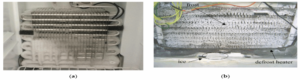
In cities like Bengaluru, Chennai, and Mumbai — where ambient humidity is high year-round — cold rooms are especially vulnerable. Here are the five most common culprits, and what you can do about each.
Cause 01
Damaged or misaligned door gaskets
Door seals are the first line of defence against moisture ingress. When gaskets crack, warp, or lose their compression, warm humid air finds its way in — and the moment it meets the freezing interior, it turns to frost. Ice near the entrance is almost always a gasket problem.
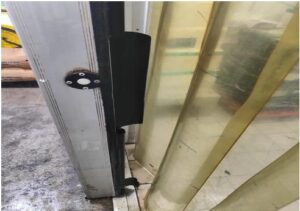
Solution: Run a cold-spot inspection along your door frame regularly. Magnetic gaskets offer a significantly tighter seal than standard foam types and are worth the upgrade for high-traffic cold rooms.
Cause 02
Poor insulation and thermal bridging
Ice forming on the outside of walls or at panel joints is a sign of thermal bridging — where a gap in insulation allows heat to conduct directly through the structure. This is especially common in older facilities or cold rooms built with low-density panels. In high-temperature cities like Hyderabad and Ahmedabad, the heat differential makes the problem worse.
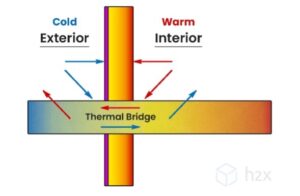
Solution: Using of good quality PUF panels with correct thickness for any new build or retrofit will mitigate this risk to a great extent. Gaps between panels should be sealed during installation, A Subject matter expert in this field can provide the right quality of puff panel.
Cause 03
Clogged or frozen drain lines
During a defrost cycle, meltwater needs a clear path out. If the drain line is partially blocked by debris — or has itself frozen solid — that water backs up and pools on the floor. It can look like a leak, but the root cause is a drainage failure in the defrost system.
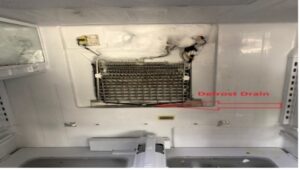
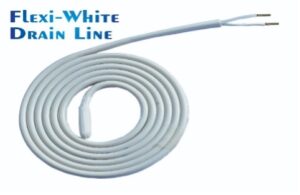
Solution: : Install a drain line heater to prevent refreezing, and schedule monthly flushes to clear biological buildup before it becomes a blockage.
Faulty defrost timers or sensors
Your evaporator coils naturally accumulate
frost during operation. A properly functioning defrost cycle clears this away on schedule. But if the defrost timer or temperature sensor is faulty, the frost keeps building — eventually blocking airflow entirely. The unit has to work harder, draws more power, and may start producing water as the system struggles to compensate.
Solution: : Consider upgrading to an intelligent controller like the Hawk-i system by Neras Tech which monitors coil health continuously and triggers defrost only when needed — reducing energy waste and preventing ice accumulation before it becomes a problem.
Cause 05
High humidity ingress through open doors
In tropical regions like Kolkata and Kochi, even a brief open-door event introduces a significant moisture load. That moisture migrates to the coldest surface in the room — typically the evaporator fans — where it freezes and gradually restricts airflow. The fans slow down, cooling becomes uneven, and the problem compounds with each subsequent door opening.
Solution: : PVC strip curtains or air curtains provide an effective barrier between the ambient and controlled environments, reducing moisture ingress dramatically without restricting access.
Ice is a symptom, not the problem
Every instance of ice formation in a cold room points to something upstream — a seal that has failed, an insulation gap, a sensor that’s out of calibration. The longer it’s left, the harder your system works and the closer your stored product is to being at risk.
At Neras Tech, we specialise in identifying the root cause behind cold room inefficiency, from thermal audits to AI-powered monitoring and turnkey maintenance programmes across India
Book a thermal audit for your facility
We provide expert site assessments and cold room maintenance: write to solutions@neratech.in